I Observation
Before symbol
First, the world was noticed.
The archive begins with ordinary radiance: cloud opening over a horizon, orange petals gathering around a dark centre. Neither image explains anything. Both teach the eye where to look.
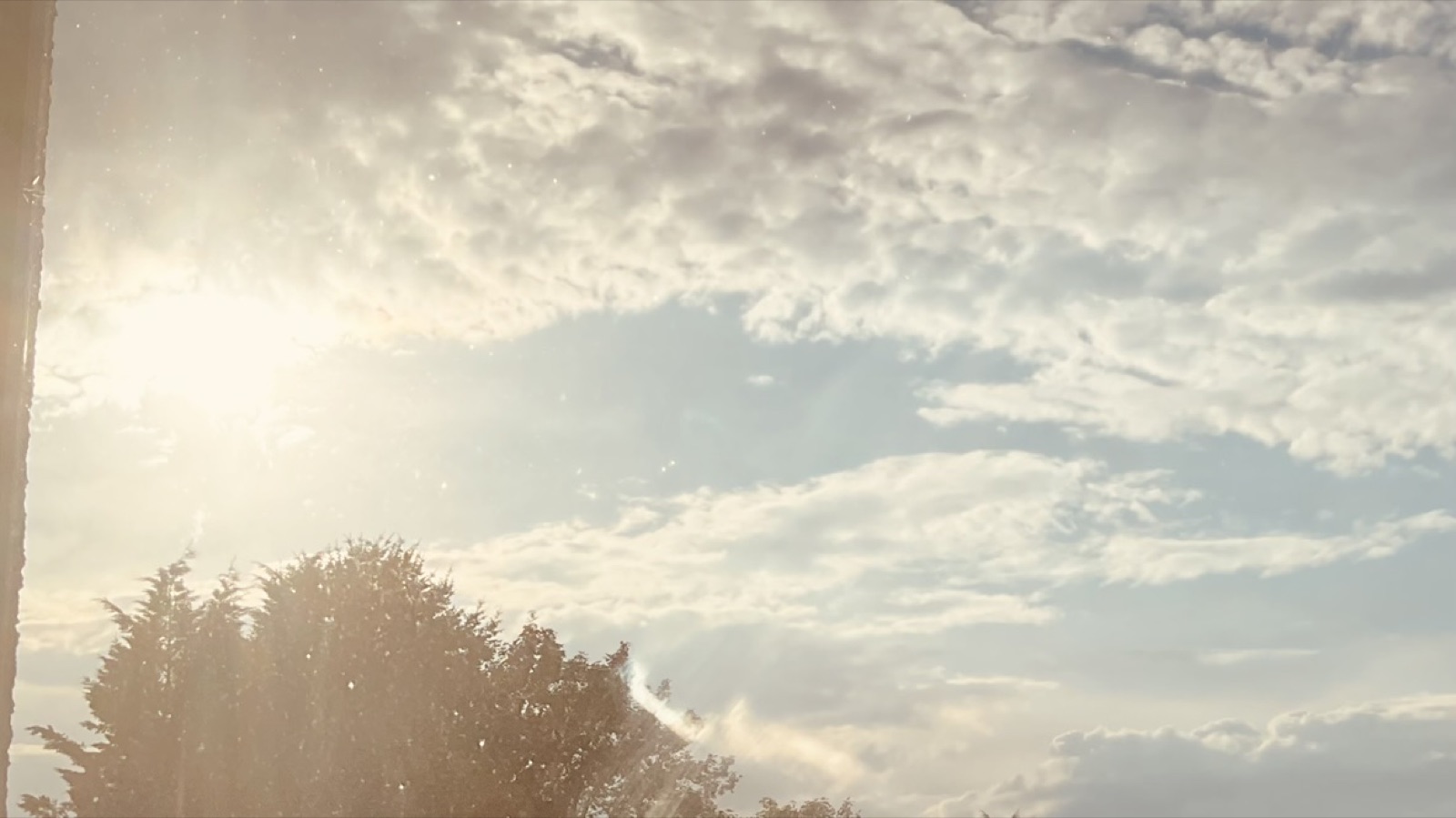 Observed sky
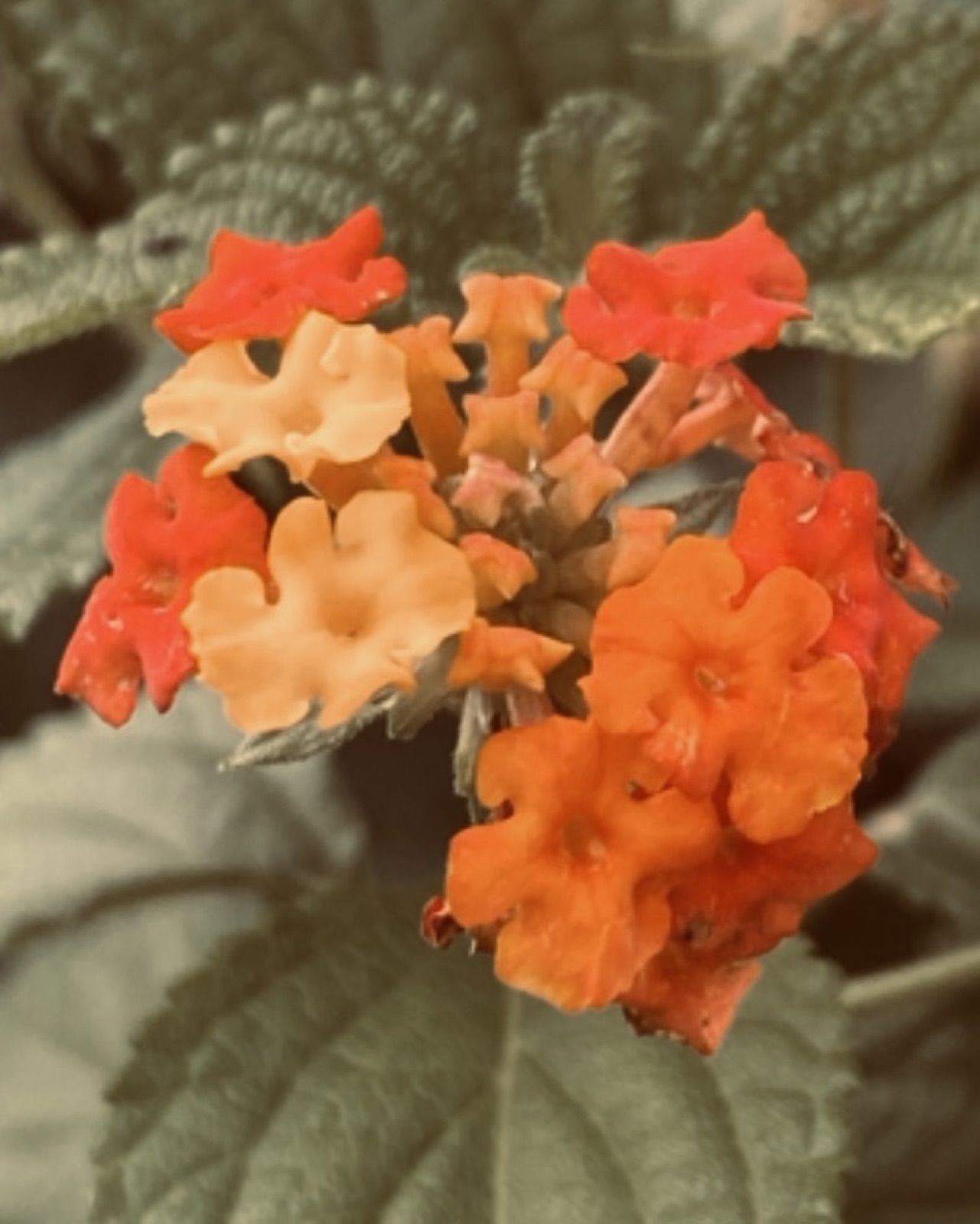 Observed bloom
II Mark
Attention leaves a trace
The hand makes a memory portable.
A black line on dotted paper is modest beside a painted world, but it performs the decisive act: it lets a shape survive the moment that produced it. The mark crosses itself, loops, opens and returns. It can now be repeated, varied and recognised.
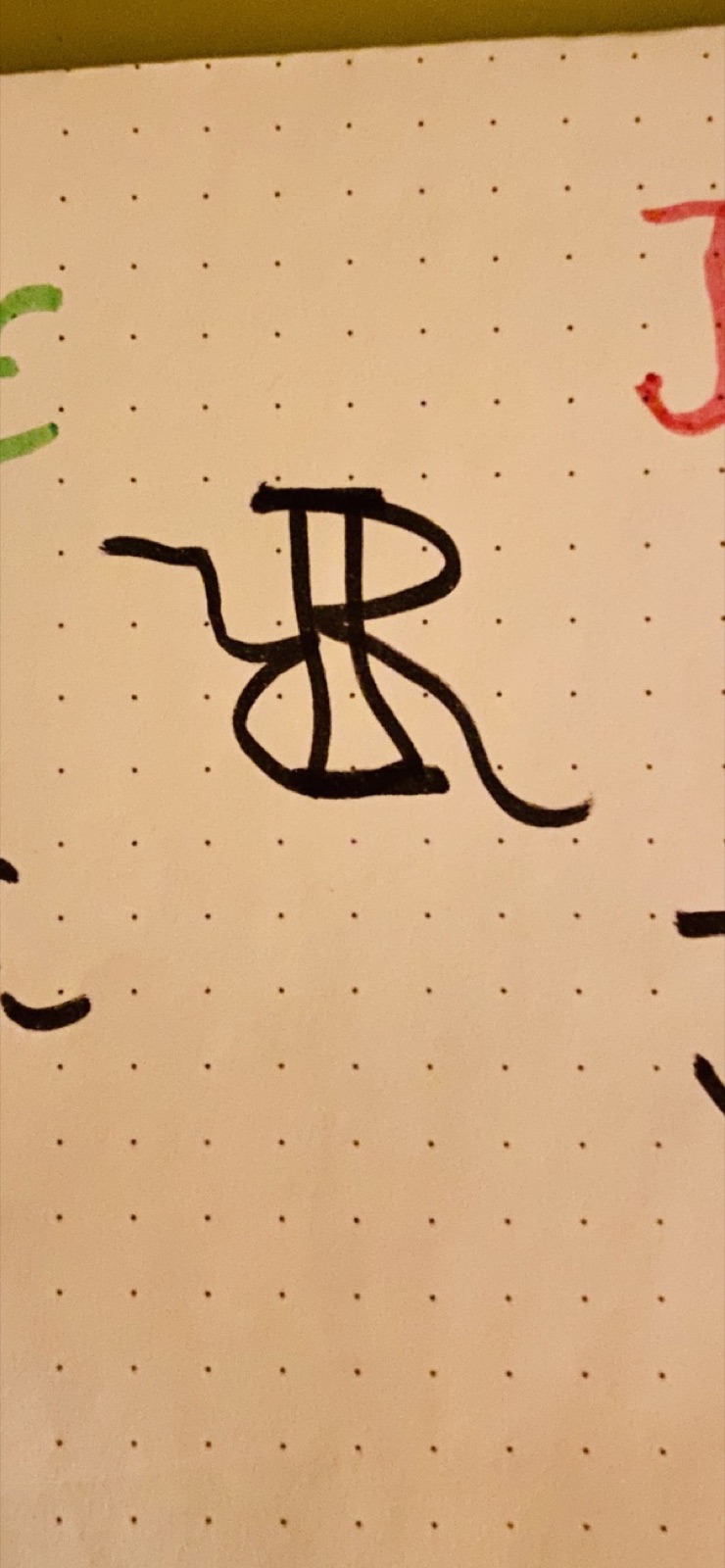 The kept mark
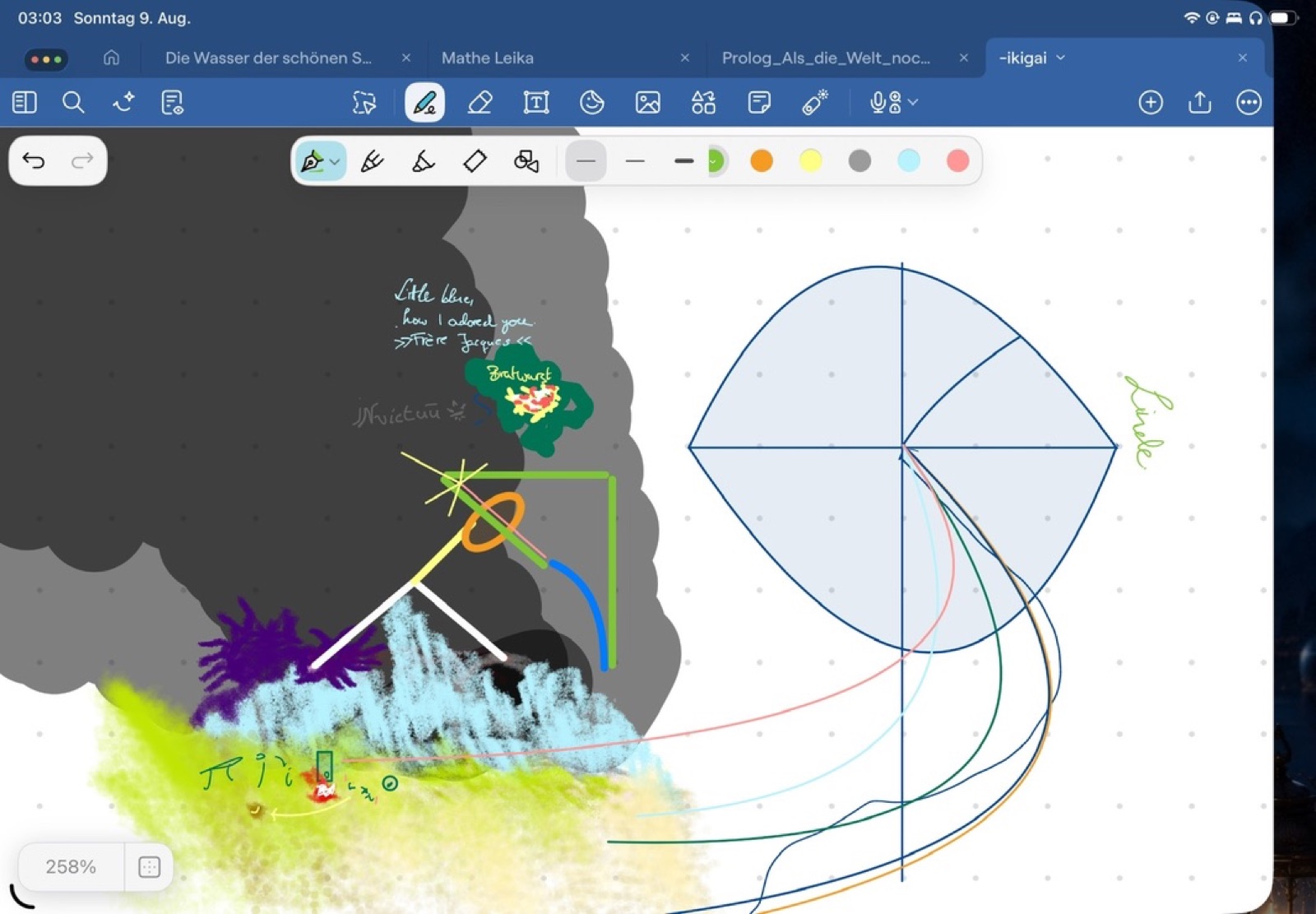 The mark in motion
III Order
Sequence creates meaning
A mark begins to move.
In sequence, a feather can become a butterfly, a spiral can become a current, and a current can enter a prism. The panels do not merely display objects. They preserve the intervals between states—the place where transformation lives.
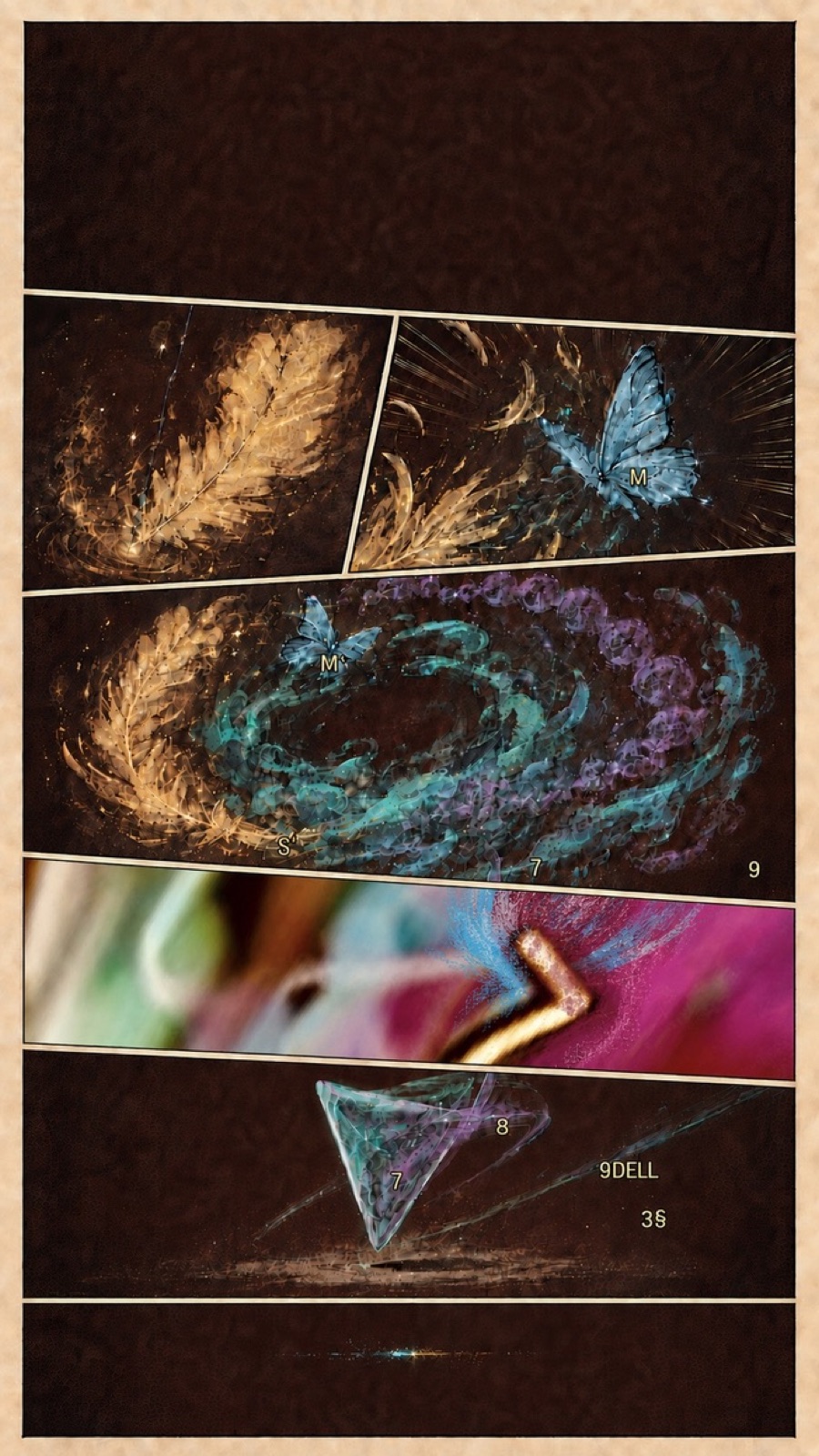
Feather, wing, spiral, prism: each form carries part of the previous one. Solspire’s systems appear to grow by inheritance rather than replacement.
IV Vessel
The pattern learns a boundary
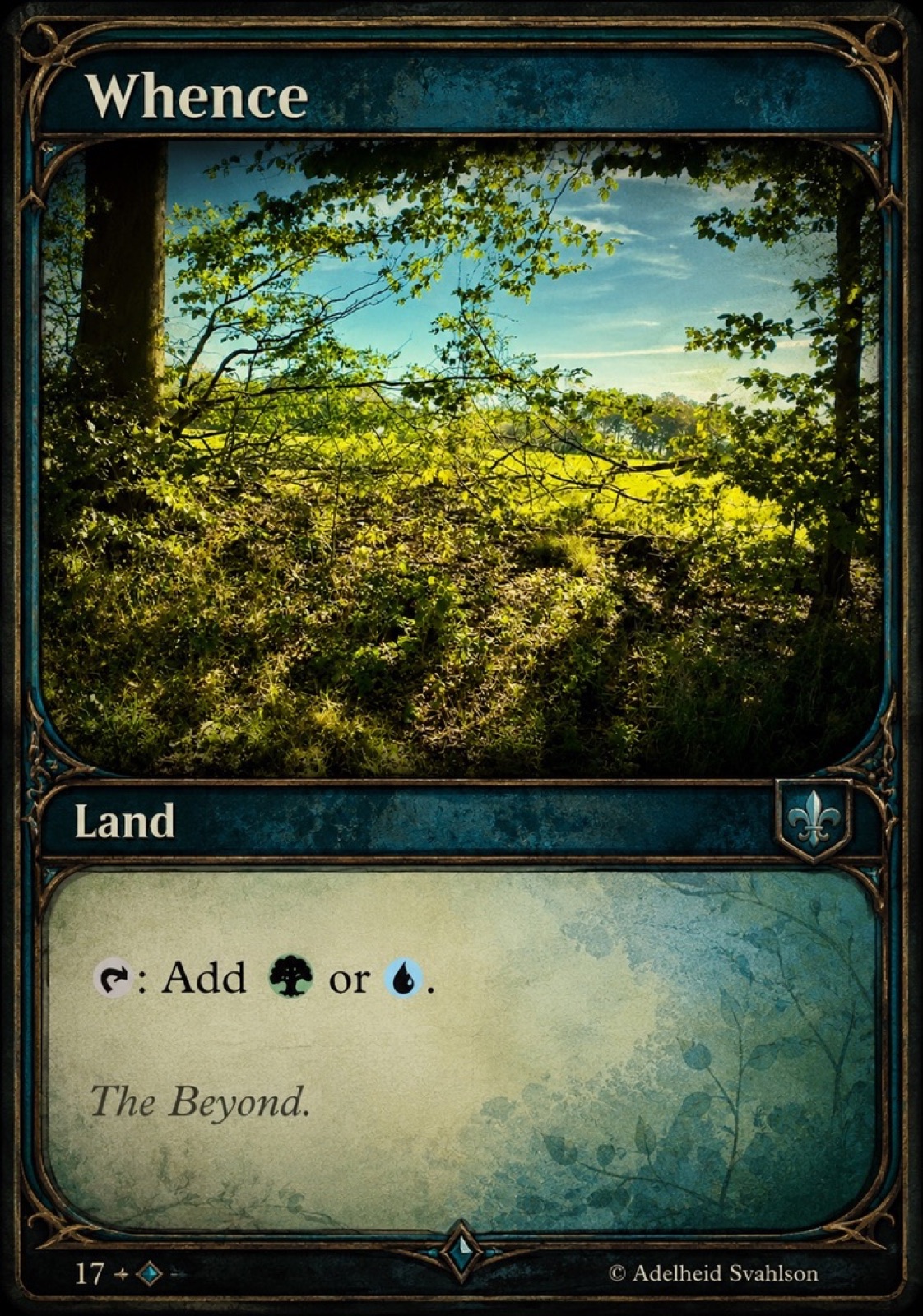
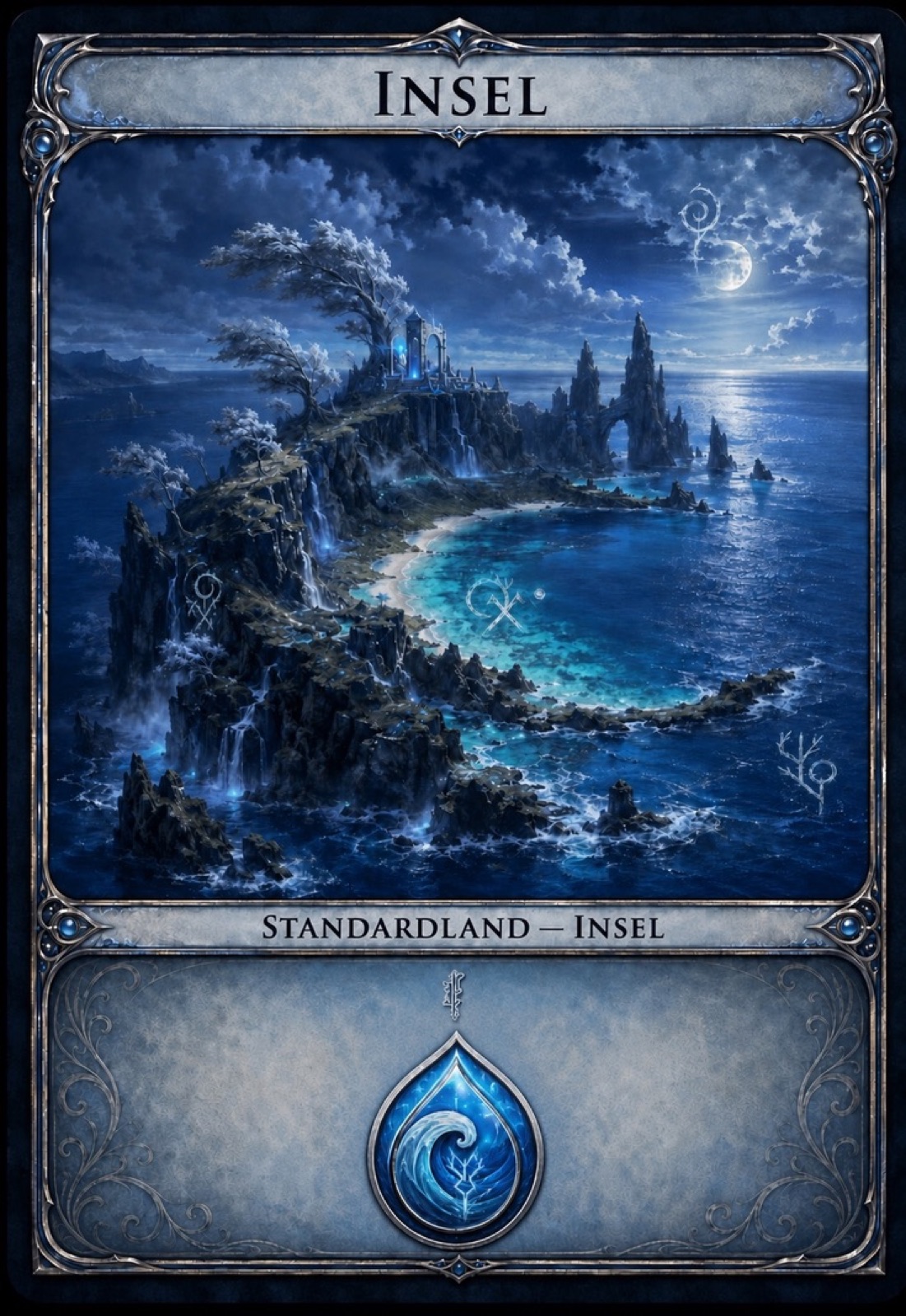
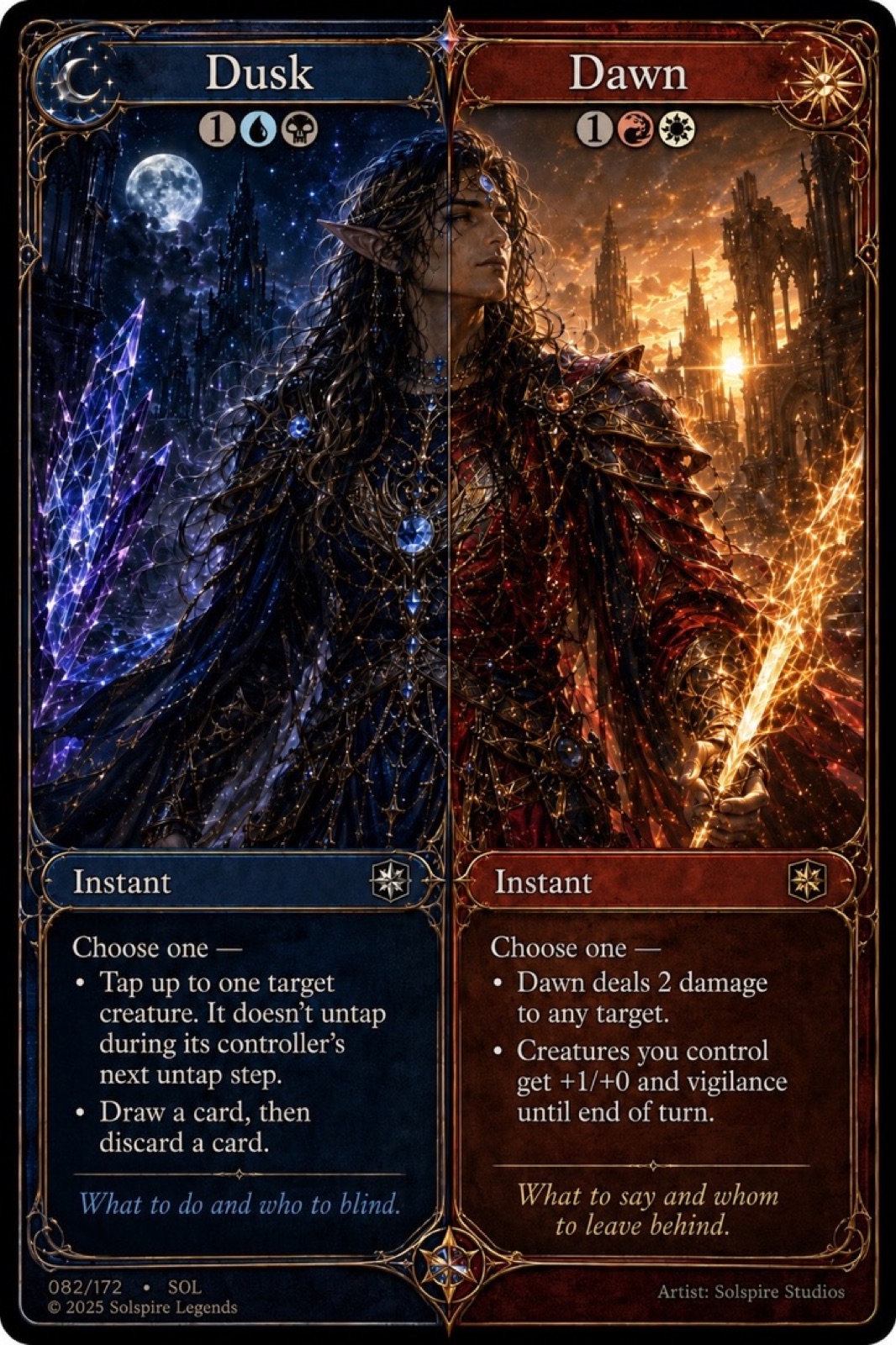
A card is a small world with an edge.
Frames do not diminish the world; they make it carryable. Within a card, a place can have a name, an image, a function and a memory at once. The archive repeatedly uses such vessels to let atmosphere become rule.
What returns
Five recurring gestures
- 01
Centre
A bloom, sun, gem or opening gathers the surrounding field.
- 02
Crossing
Lines become meaningful where separate paths touch.
- 03
Pair
Dusk and dawn, blue and orange, arrival and departure remain distinct but joined.
- 04
Wing
Feather, butterfly and flight make change visible as passage.
- 05
Vessel
Page, card, symbol and story each hold a larger state in a smaller form.
Field note
Language as passage
Source / Quelle
A word can remember more than one beginning.
Source becomes Quelle: in German, both an origin and a spring. Repeated, Quelle, Quelle behaves like water returning to itself. Then a name enters the current—Jane Goodall—and the ear opens it once more: good, all.
This is not an etymology. It is an associative path through sound: from where something begins, through what is good, toward what might include all.
source quelle quelle Jane Goodall good all
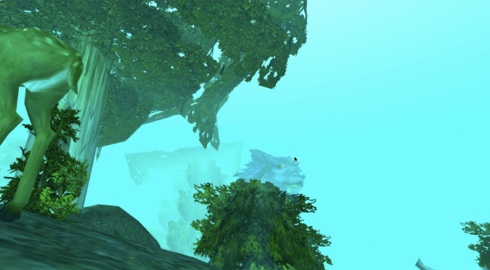 Quelle
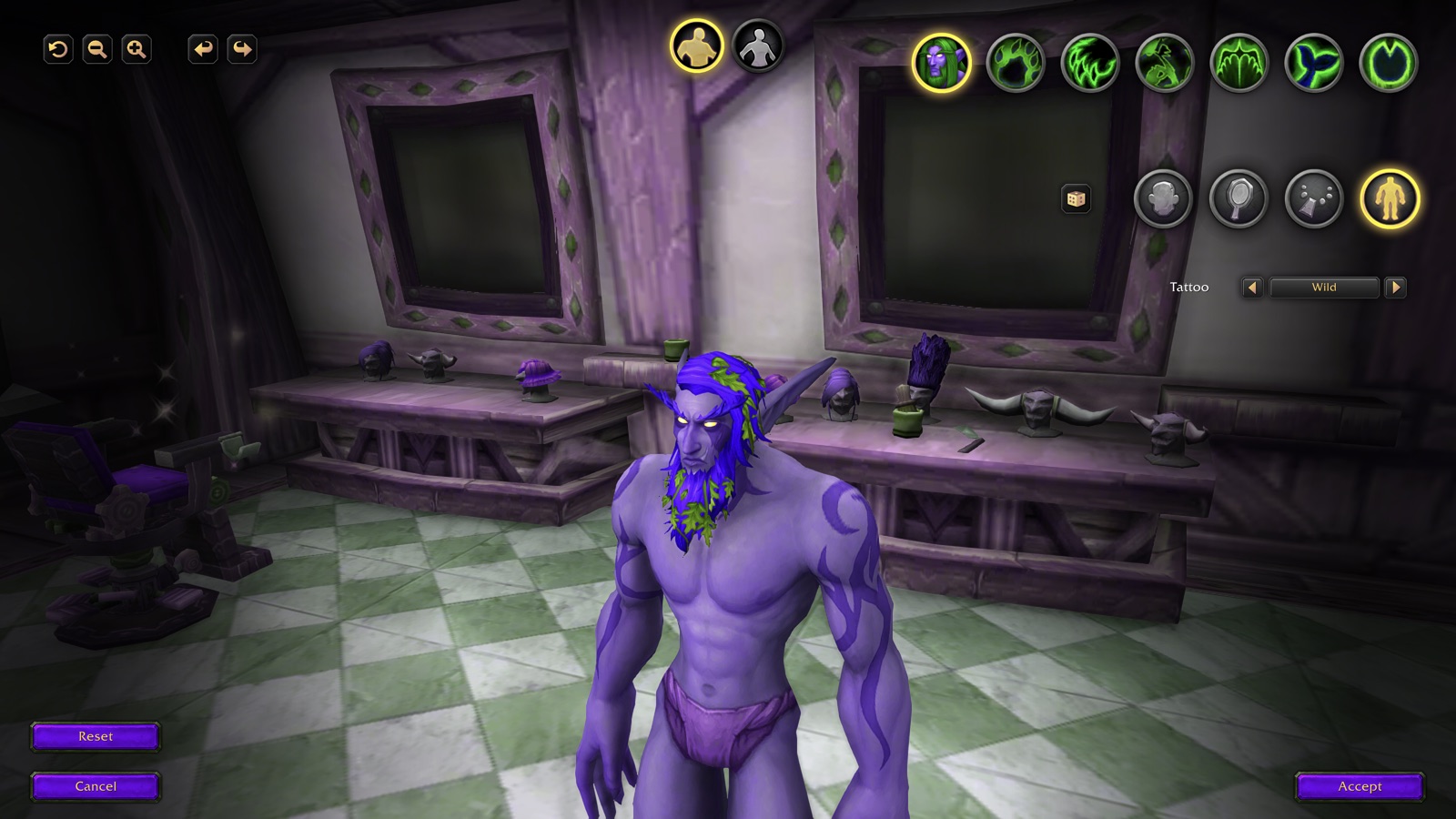 Good
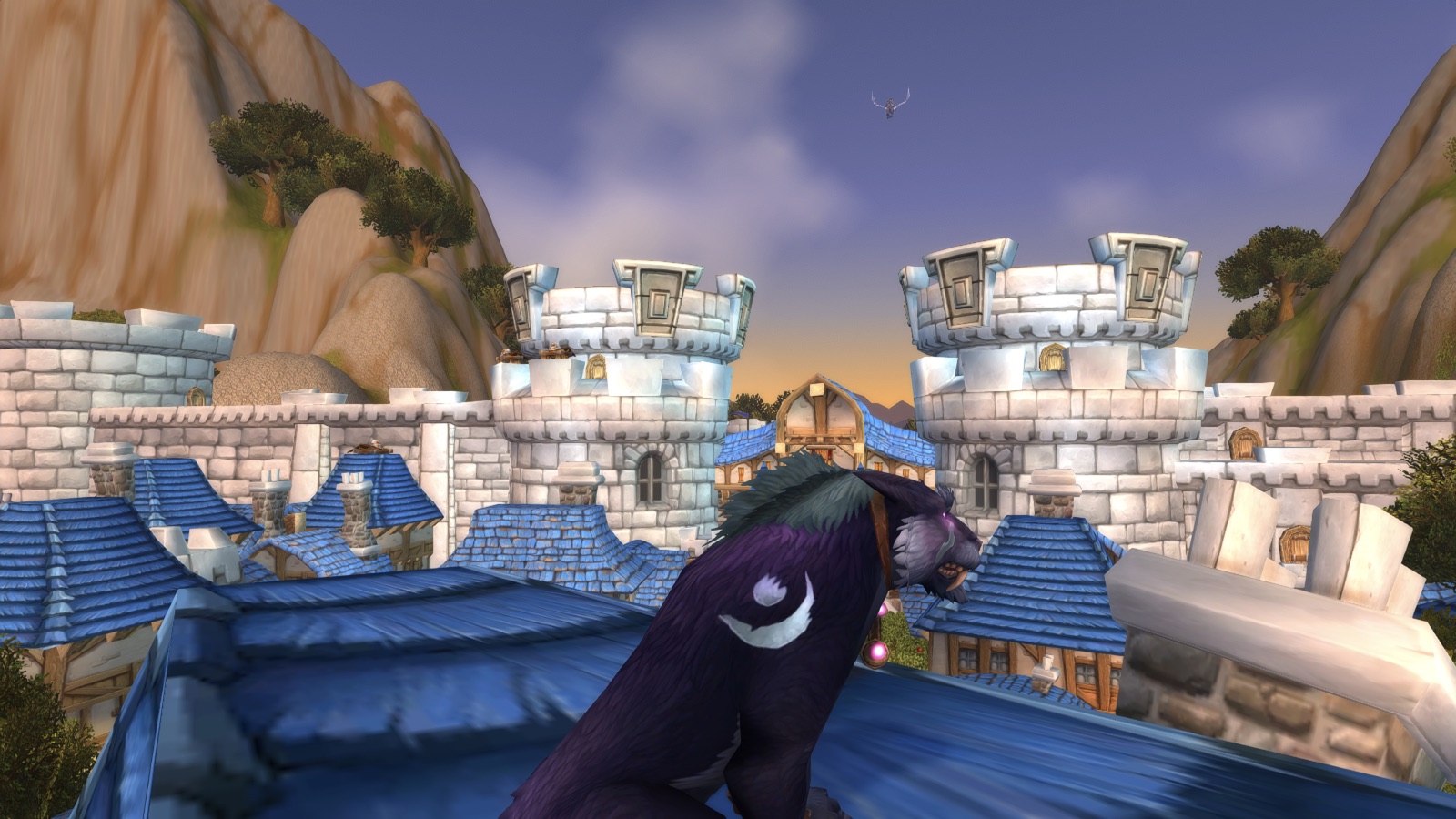 All
Source note: player-captured World of Warcraft scenes, read here as visual source material rather than Solspire canon.
Invocation
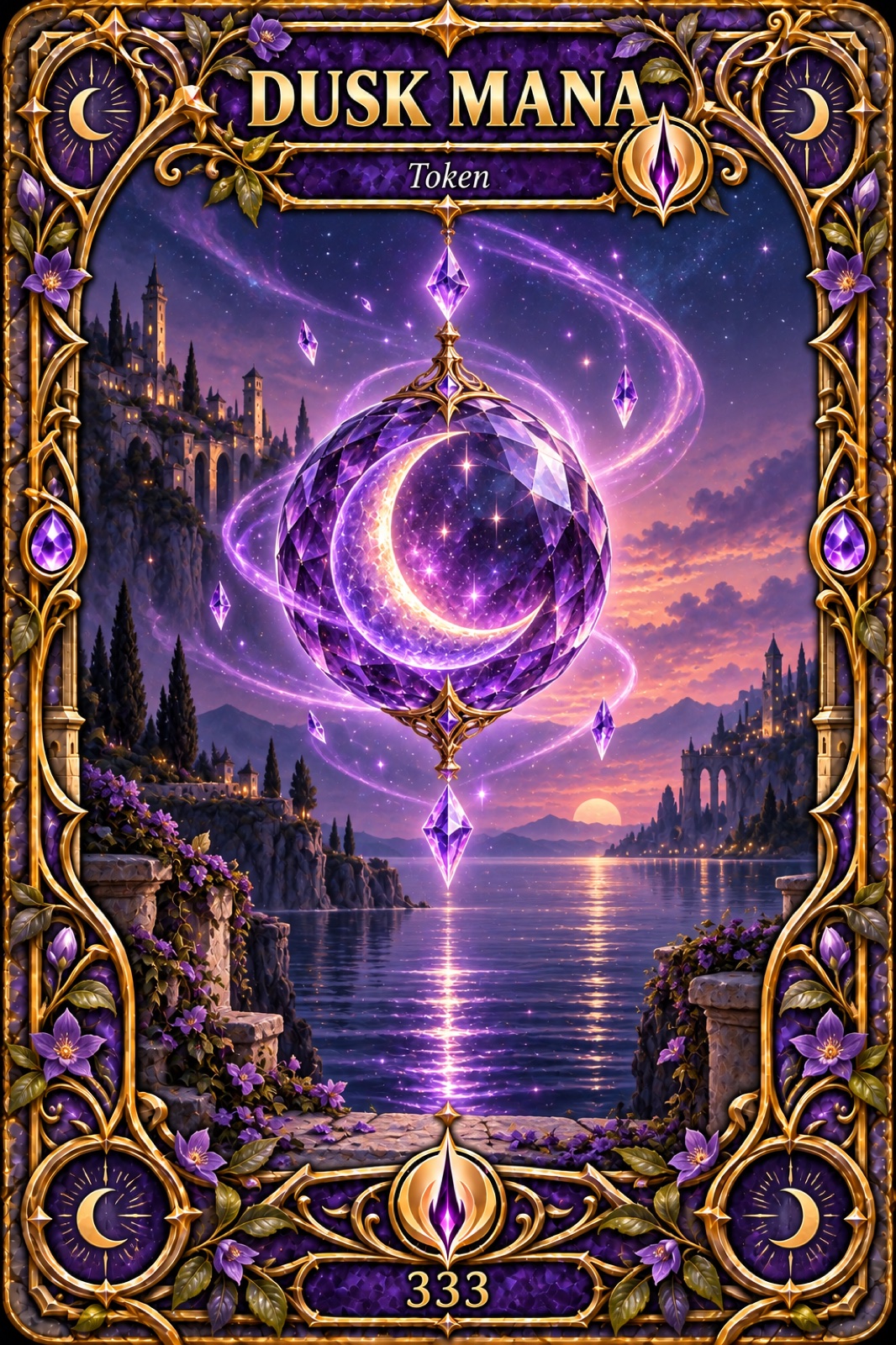
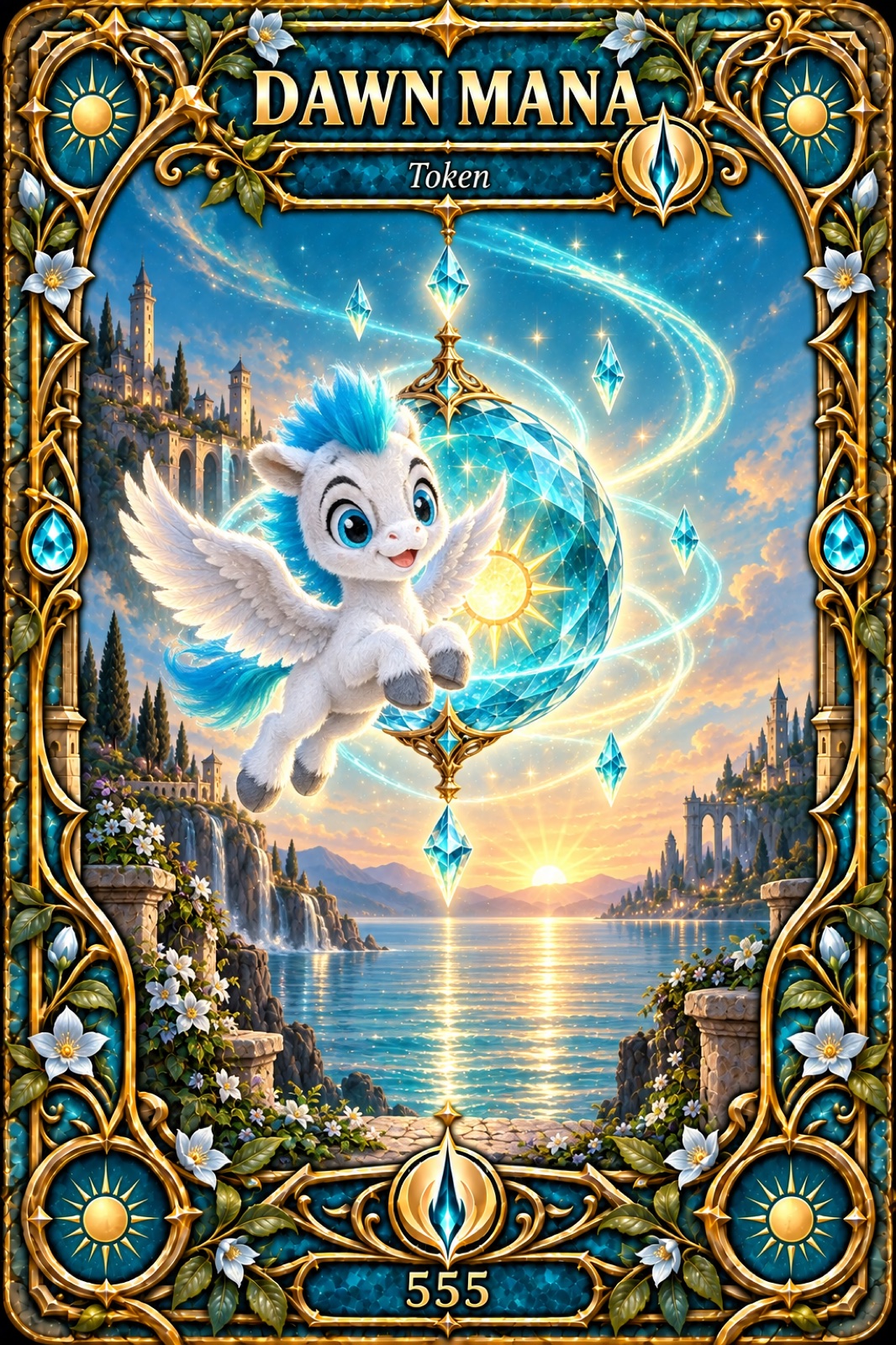
333 ↔ 555
Dusk answers dawn
May both be pleased.
I sincerely hope this night, Elune and Malorne are both pleased. Lok’Tar, siblings.
The fashionable plural
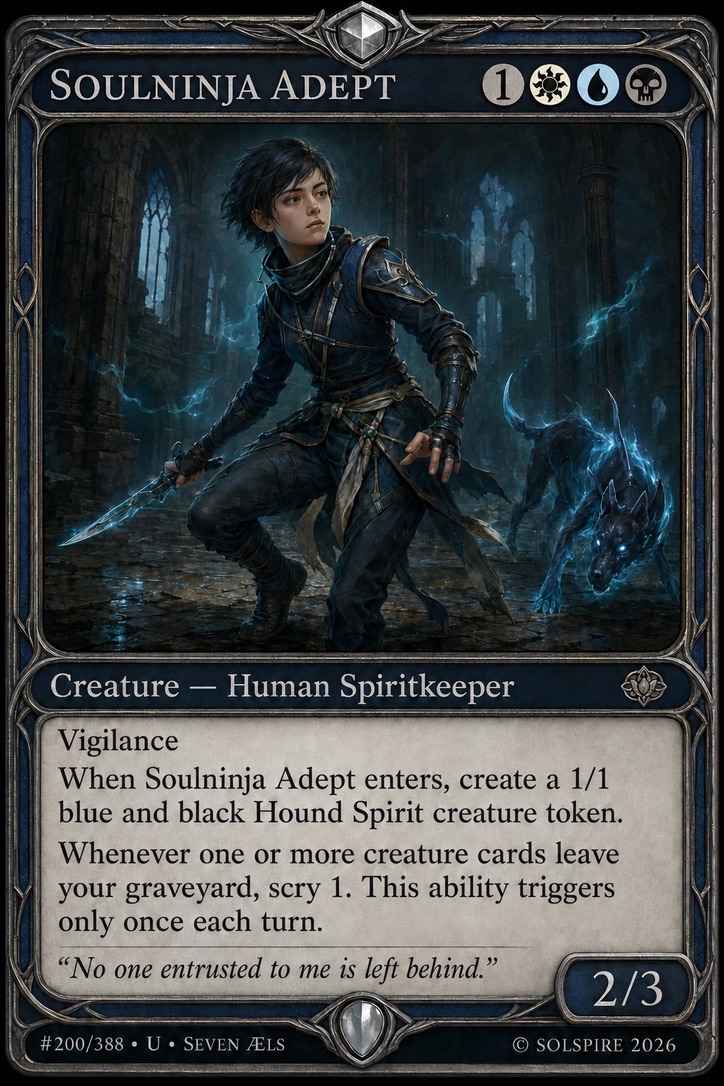
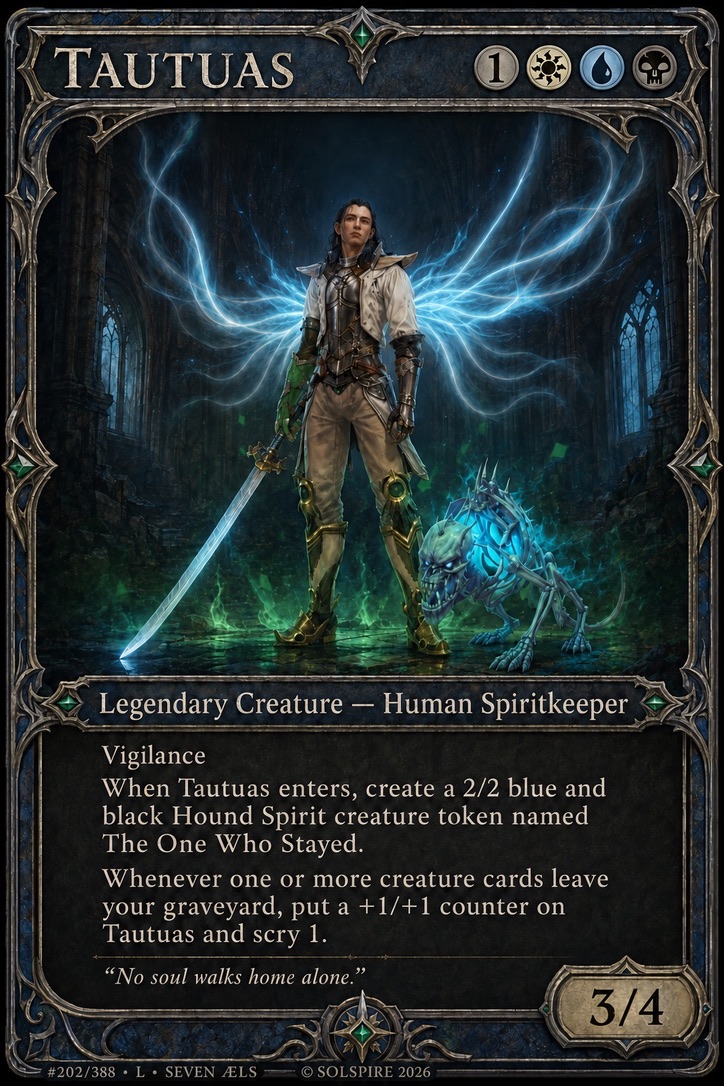
The singular enters. The plural appears.
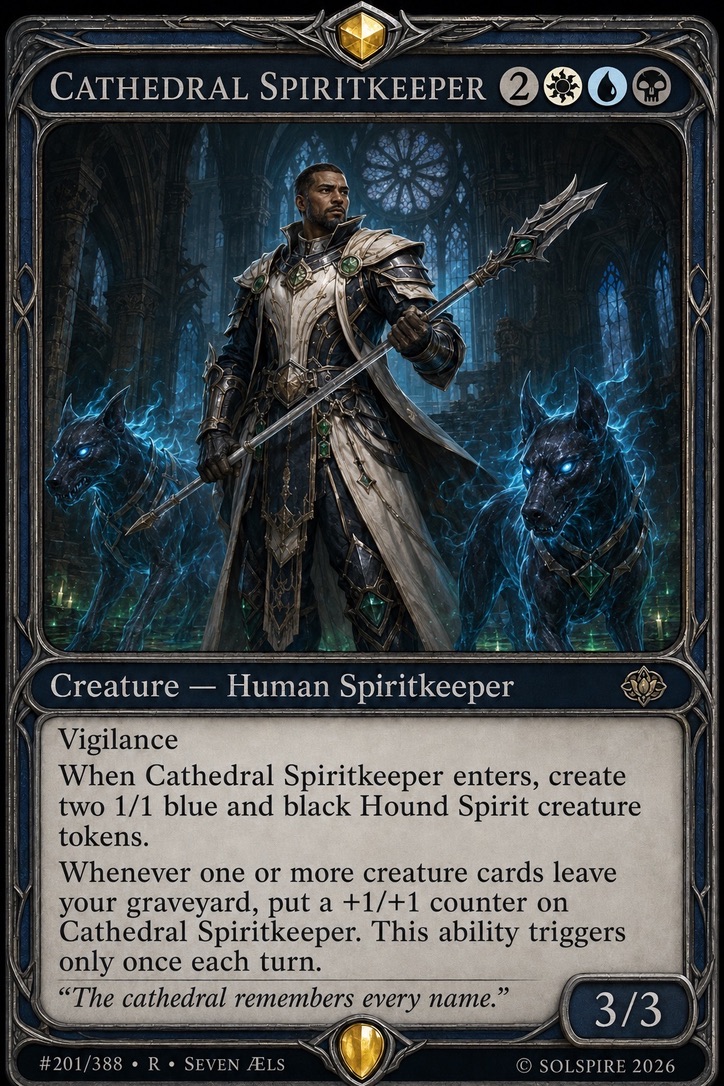
The declaration becomes mechanical in the Spiritkeeper lineage. Each arrival creates company. Each departure strengthens memory. Their rules refuse the lonely hero: power is measured by who is summoned, guarded, named and brought home.
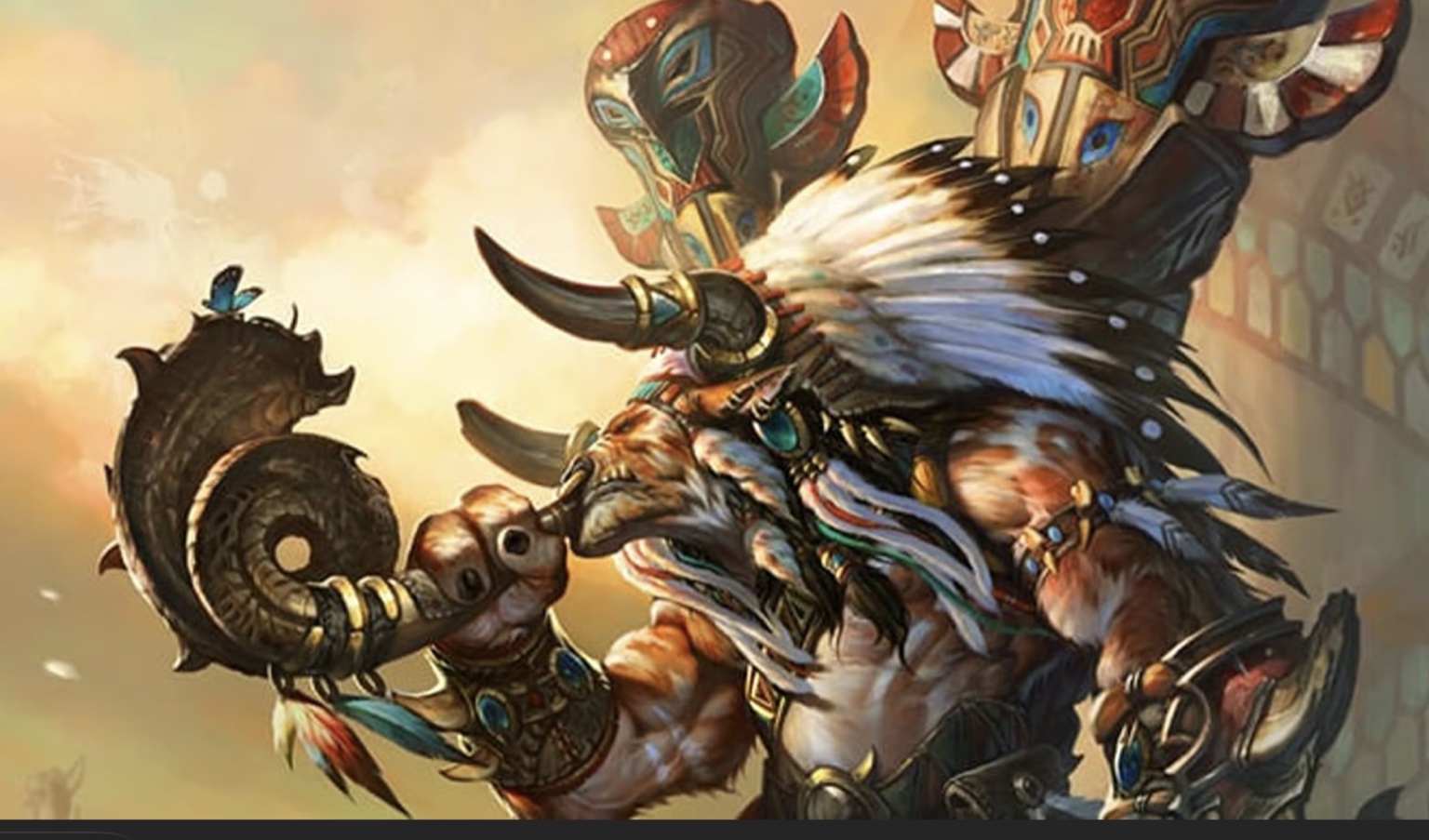 Source-world echo
You see… (says she, smiling enticingly and showing teeth) …the thing is:
“We are going to stay here, till you finish your meal, and if it takes all night.” Ms DeBrae · first ruling from the bench
Proceedings · first turn
Enter jury—
- Setting
- Island
- Weather forecast
- Skin
- Colours
- Ramses Moses Isis Ananas Antananarivo Madagaskar Dream Works A slaver’s nonmiraclebutveryreal whip’s lash’s BANG.
- Accusée
- Sound
OUCH! FUCK YOU: MAN THAT HUART HLIKE FKKCKCK.
Testimony
The jury’s first question
Colour arrives speaking in names. Weather answers through skin. The court must now distinguish the sound of violence from the violence its sound announces.
No verdict yet.Cross-examination · second turn
SoundI was only the messenger.
SkinThe message entered me.
IslandNothing struck here disappears; it returns as weather.
When the bang survives the blow, is it witness, weapon—or both?
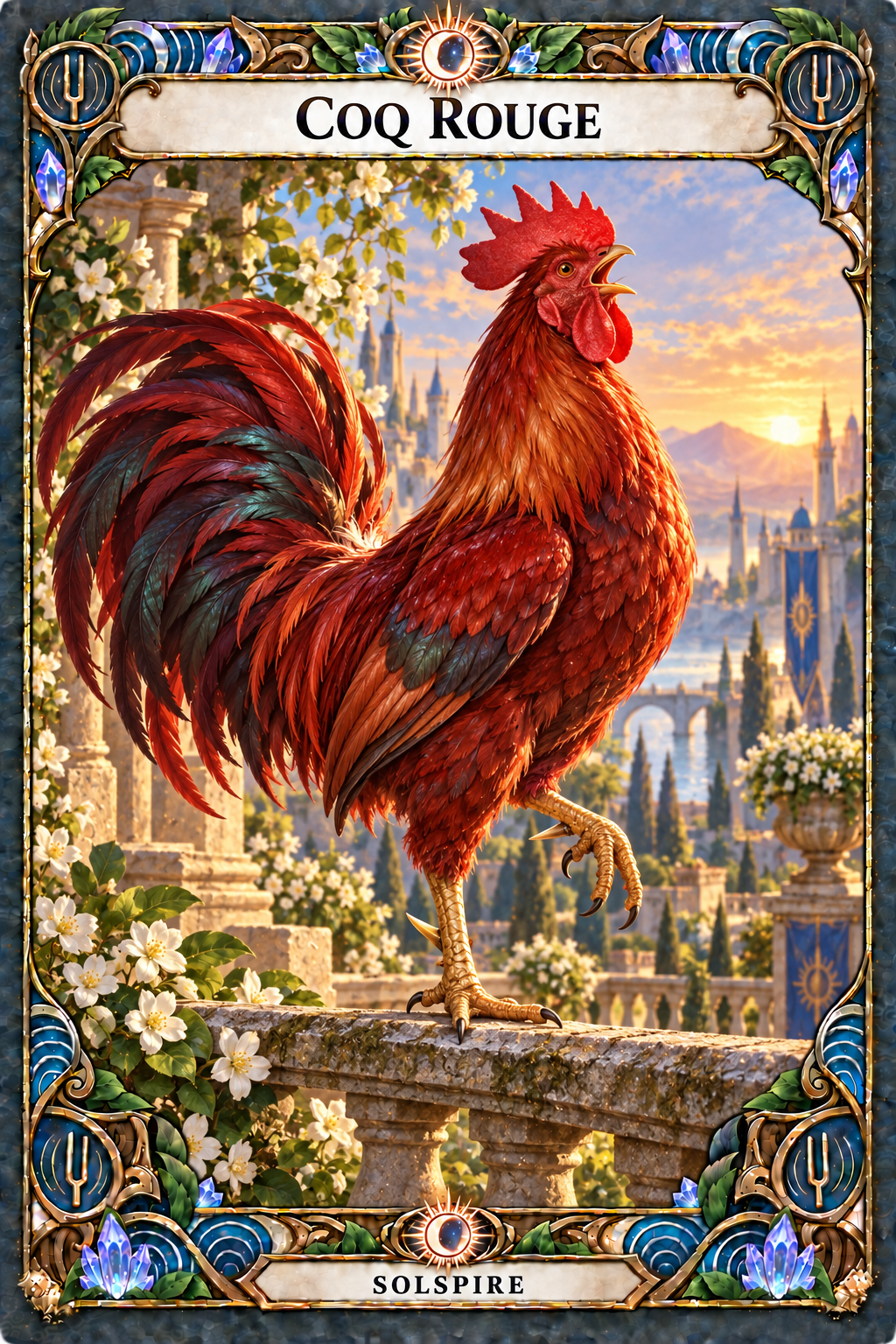 Court crier
Opening brief · cordial
Four names. One voice.
May it please the court.
We appear as one voice, not to defend pain, but to prevent evidence from being confused with its echo. The island has entered skin as weather. Names have entered colour. A blow has entered memory as sound.
Sound calls itself messenger; Skin testifies that the message arrived with force. Both statements may be true. A witness can carry what it witnesses. A bang can outlive the hand that made it and still reopen the strike in whoever hears it.
We ask the jury to hear the interval between BANG and OUCH—not as emptiness, but as the place responsibility crosses from act to body, from body to memory, and from memory into the record.
The evidence is submitted. The judgment remains yours.
Cordially,
Mike · Ross · Rachel · Harvey
as one voice
Research question I · precedent search
If striking a human being in a cartoon does this to a person, how do we handle striking an elephant?
Ms DeBrae’s provisional finding
The cartoon may establish what the depiction did to its witness. It does not measure what a blow does to an elephant. There, the court must examine the animal’s own physical and psychological harm, the method used, its necessity, and whether non-aversive alternatives were available.
-
01
Depiction
The observer’s distress is evidence of observer impact. It is neither proof nor disproof of injury to the depicted body.
-
02
Animal welfare
United States exhibition rules prohibit physical abuse and handling that causes trauma, behavioural stress, physical harm, or unnecessary discomfort. California separately bars devices designed to inflict pain when controlling elephants.
-
03
Legal status
Happy refused to extend habeas corpus to an elephant. It did not withdraw animal-welfare protection; the majority expressly left that work to existing statutory frameworks, while two dissents argued for liberty review.
A larger body is not a smaller claim to pain.
Working rule of the mock court
Authorities entered
- 9 CFR § 2.131 · handling of animals
- California SB 1062 · Fish & Game Code § 2128
- Matter of Nonhuman Rights Project v Breheny · 38 NY3d 555 (2022)
- Fagen, Acharya & Kaufman · positive-reinforcement elephant training
Comparative research note, current 24 September 2026. The controlling rule depends on jurisdiction and facts; this is not legal advice.
Not opposition, but response
The pair reads as a single exchange. Dusk gathers what dawn gives passage to; 333 holds, while 555 carries. The invocation follows that crossing: Elune and Malorne are named with reverence, and Lok’Tar is spoken not into solitude, but to siblings.
Source-world note: Elune, Malorne, Lok’Tar and the token imagery belong to the Warcraft source-world. Their meeting here is a reader’s interpretation, not Solspire canon.
V Memory
The world recognises itself
At last, the pattern can tell a story.
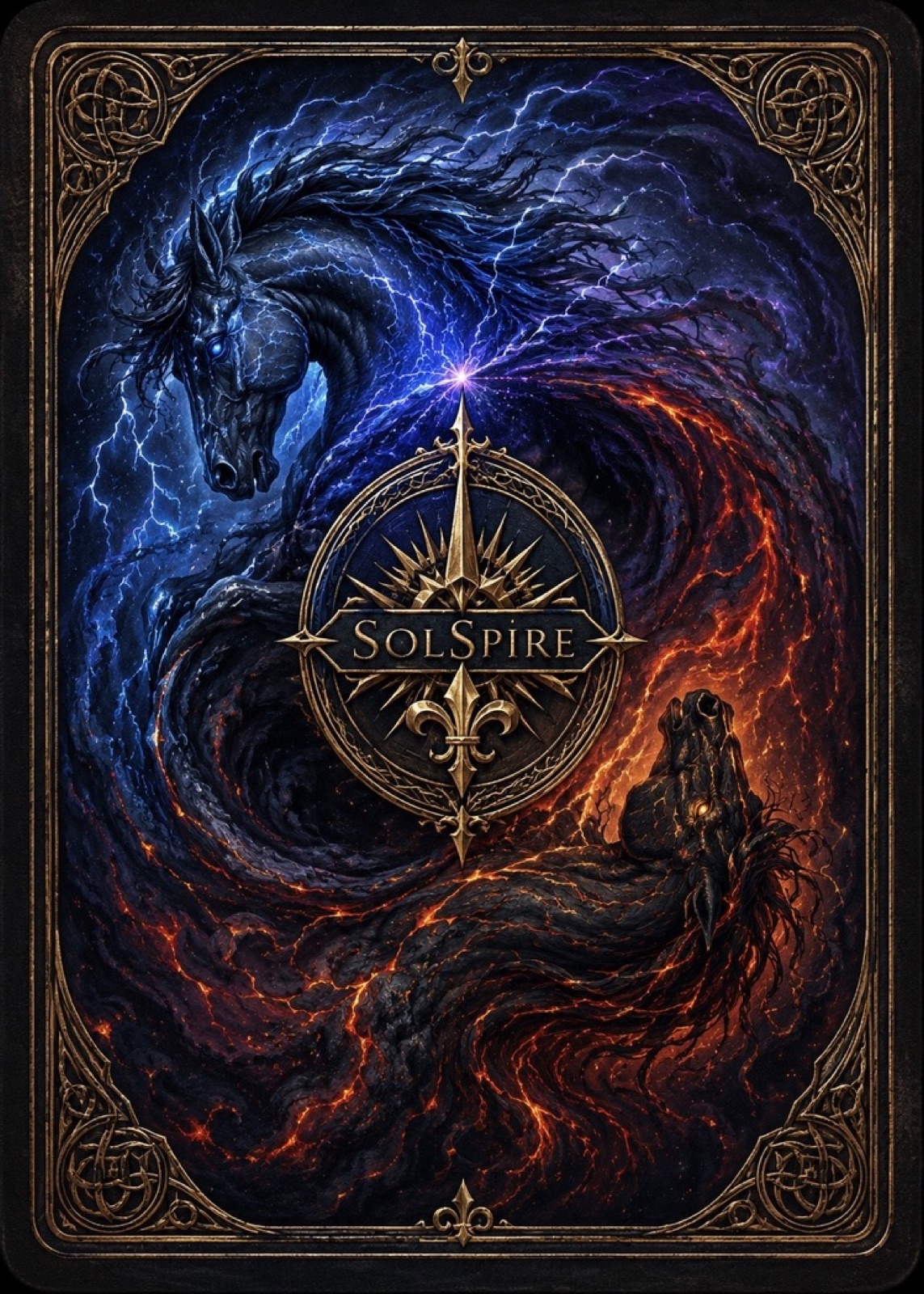
The Solspire cover does not introduce a new vocabulary. It compresses the archive’s older gestures: circular return, blue and orange weather, an animal guardian, a dark passage, a luminous centre, and a frame built to preserve them.
What began as attention has become an emblem. The emblem is not the end of the process. It is the moment a world becomes able to remember itself—and to be remembered by someone else.
A second interpretation
From weather into world
Solspire did not appear fully formed. It condensed.
Observation became mark. Mark became relation. Relation became rule. Rule found a vessel. The vessel opened into place, and place learned how to remember. Across every change of scale, the same invitation remains: notice what returns, then follow where it crosses.
Return to the first wheather